
Homeowner questions
Estate Sale or Auction: Which Fits Your Household?
An estate sale offers belongings at set prices during an organized event; an auction uses bidding under the auction’s terms. Compare the contents, total fees, access needs, and final handoff plan rather than assuming either format always produces more money.
 916 Estate Sales · 916estatesales.com© 916 Estate Sales
Begin with the whole household and your goal
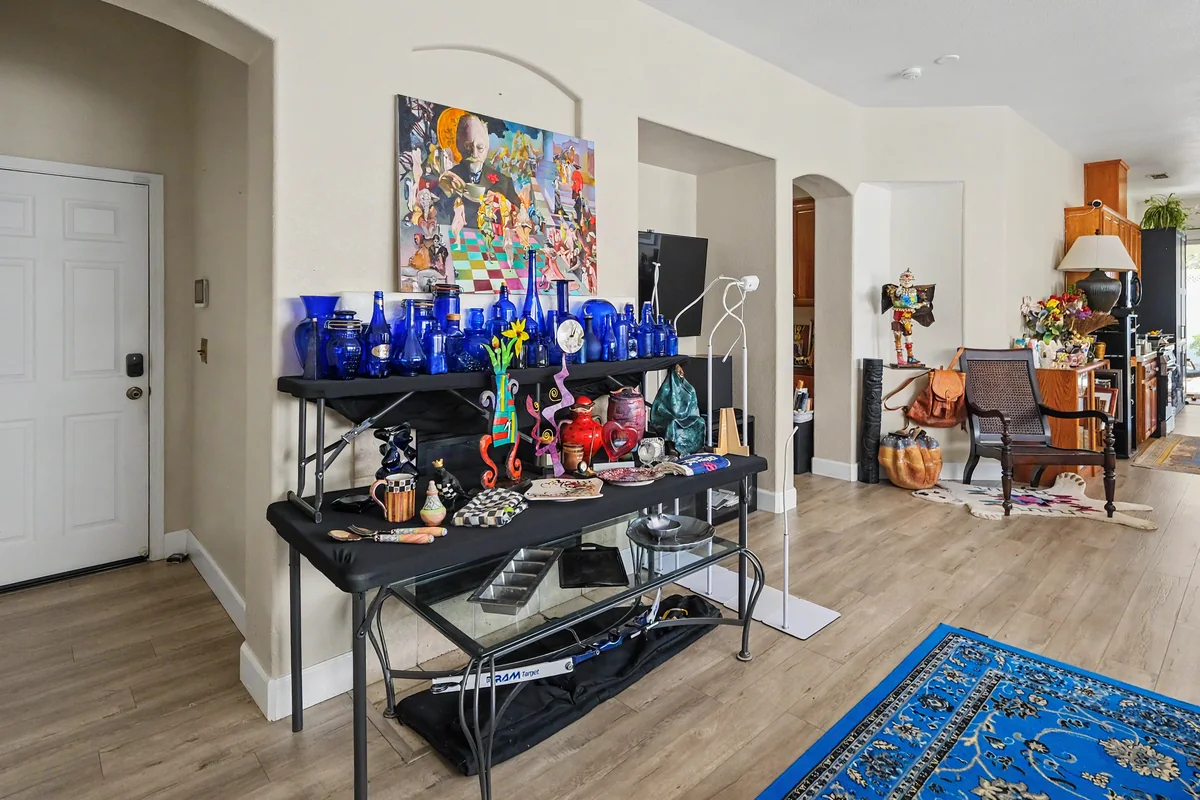
Decide whether you need help with a furnished home, a few specialist pieces, or primarily removal of belongings. Include your deadline and whether shoppers or buyers can enter the property. A decision about one collection does not automatically settle how to handle the rest of the house.
For Sacramento-area homeowners, a move or listing appointment often matters as much as the selling format. Ask each provider which parts of the household it will handle and which items or tasks will need a separate arrangement.
Compare how items are offered
In an estate sale, the team prepares displays, sets prices, advertises the event, and manages shoppers and checkout. Ask how prices and any discounts are decided. At auction, items or groups of items are offered for bidding; the provider’s terms determine the format, deadlines, and any reserve arrangements.
Neither an asking price nor an estimate guarantees a result. Ask a prospective provider what evidence it uses to assess your belongings. Condition, identification, buyer interest, and the format can affect the discussion.
Compare the final accounting, not one percentage
Request each provider’s written charges and how the seller’s proceeds are calculated. Ask about commission, any minimums, preparation, transport, photography, platform fees, storage, buyer charges, and removal. These are questions to ask, not claims that every provider applies each charge.
916 Estate Sales usually charges 45–50% of net sales with no upfront estate sale cost. Collected sales tax and shopper-paid card fees are excluded before the split. Do not compare that figure directly with another proposal until both define their calculation and included work.
Work backward from the property handoff
Ask where items will be offered and collected, when buyers can pick them up, and who handles remaining items. If transport to another location is proposed, confirm responsibility, cost, and timing. If buyers collect at the home, discuss access and the schedule.
An auction closing time or a sale’s final day is not necessarily the empty-house date. Clarify donation, removal, cleaning, and keys separately. Neither method guarantees every item will sell.
Choose the scope you can understand in writing
Compare two practical plans for your actual contents. Ask what happens if an item does not sell, who can authorize changes, how payment is documented, and when you receive proceeds. Keep those answers with the agreement.
916 Estate Sales offers professional estate sales, estate liquidation, downsizing assistance, and cleanout coordination; this comparison does not announce an auction service. Request a free walkthrough to discuss whether our estate sale approach fits your home.